At-Home Science Experiments for Curious Minds After School
11 July 2026
Got a mini Einstein running wild in your living room after school? You're not alone! Every curious kid seems to hit hyperdrive once they get home—and what better way to channel that energy than with some fun, mind-blowing science experiments you can do right in your kitchen or backyard?
We’re talkin’ easy, safe, and seriously cool at-home science experiments that’ll leave your kiddo wide-eyed and maybe even a little messy (science is rarely tidy, right?). These experiments aren’t just for fun—they sneak in a ton of learning while your child thinks they're just making a homemade volcano or growing a crystal.
So, grab your safety goggles (okay, you can use sunglasses), roll up your sleeves, and let’s bring the lab to the living room!
Why At-Home Science Experiments Are Totally Worth It
Let’s be real—after a long school day, most kids aren’t begging for another worksheet. But give them a bottle of vinegar and some baking soda, and suddenly you've got enthusiastic little chemists on your hands. Here’s why at-home science is a win-win:- Hands-on learning is memorable.
- Makes abstract concepts real (who really gets potential energy until they build a rubber band rocket?).
- Encourages curiosity and critical thinking.
- Perfect bonding time for parents and kids.
- Screen-free and budget-friendly—score!
Science isn’t just a subject in school—it's a way of thinking, experimenting, failing, asking “why?”, and then trying again. And that’s a life skill, my friend.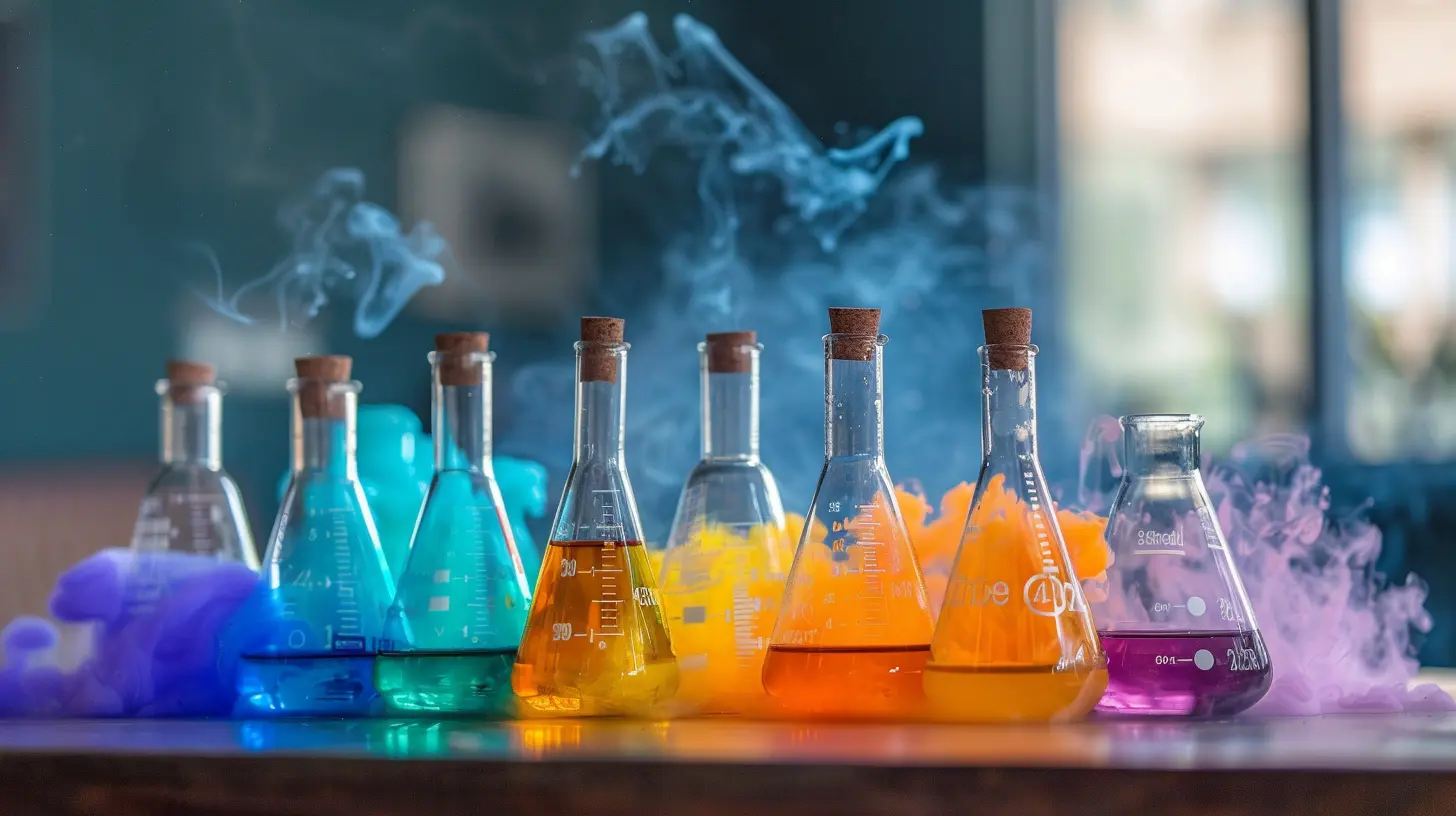
The Golden Rules of Home Science
Before we dive in, let’s talk safety and setup. You don’t need a Bunsen burner and a white coat to get started, but a few basics can go a long way:- Always supervise your kids!
- Cover surfaces. (Pro tip: Cookie sheets and old newspapers are lifesavers.)
- Have towels (or better yet, Clorox wipes) nearby.
- Keep a trash bag handy.
- Use jars, bowls, plastic cups—whatever you have on hand.
- Most importantly: have fun and be okay with a little chaos.
1. Rainbow in a Jar – Density in Action
What You’ll Need- Honey
- Corn syrup
- Dish soap
- Water (add food coloring for flair)
- Vegetable oil
- Rubbing alcohol
- A tall clear glass or jar
- A spoon (to pour slowly)
The Science
Each liquid has a different density. When poured carefully, they’ll stack up without mixing like magic!
Steps
1. Slowly pour each liquid into your jar in this order: honey, corn syrup, dish soap, colored water, vegetable oil, and finally, rubbing alcohol.
2. Pour gently over a spoon to prevent mixing.
What’s Happening?
Denser liquids stay at the bottom, while lighter ones float. It’s like a fancy science smoothie—but don’t drink it!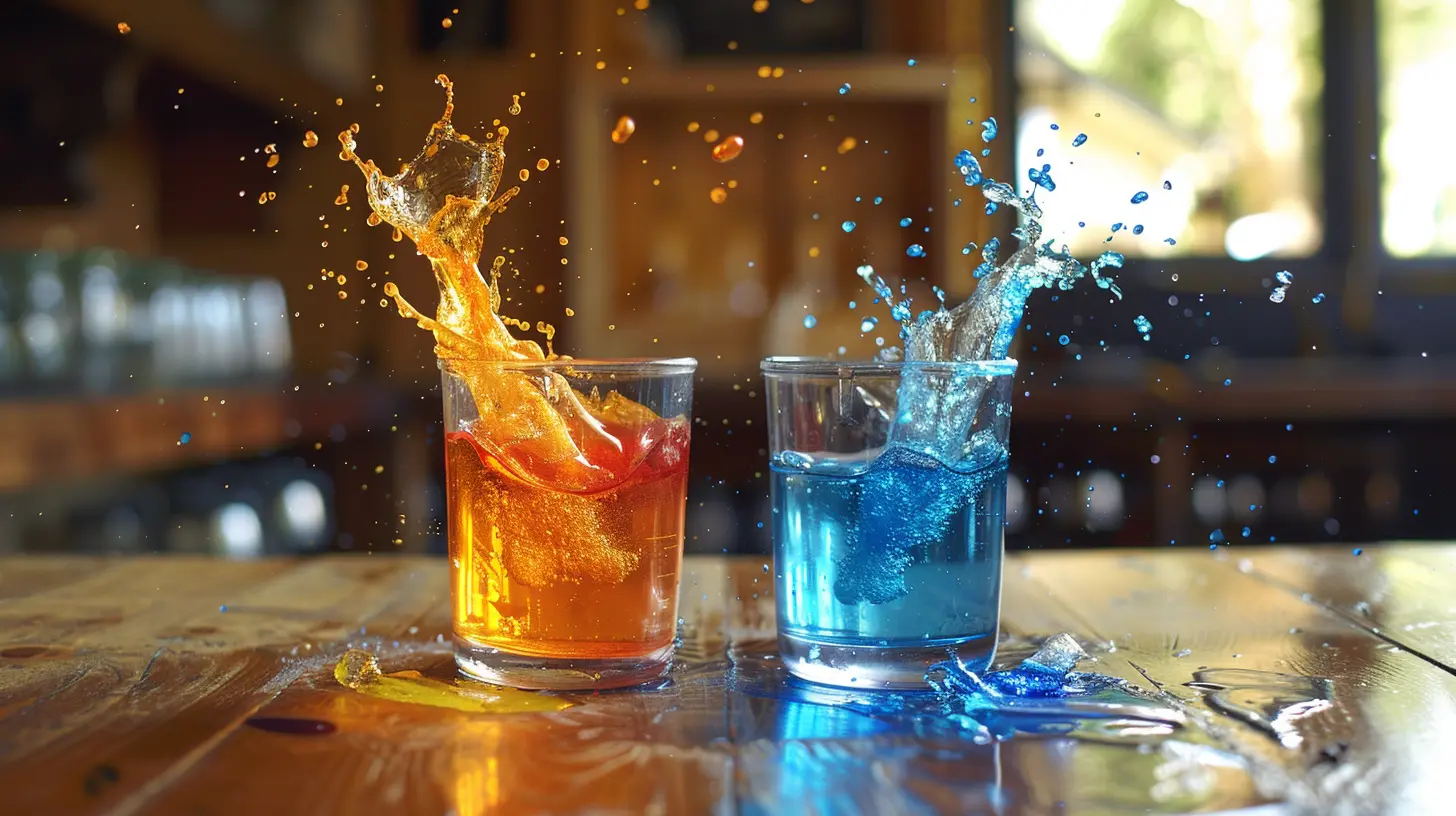
2. Walking Water – Capillary Action
What You’ll Need- 6 cups or jars
- Paper towels
- Food coloring
- Water
The Science
Capillary action pulls liquid through the paper towel from one cup to another—think of it as plants drinking water through their roots!
Steps
1. Arrange six cups in a circle or line.
2. Fill cups 1, 3, and 5 with water.
3. Add red, yellow, and blue food coloring to the first, third, and fifth cups.
4. Fold paper towels into strips and place one end in the colored water and the other in the empty cup next to it.
Watch What Happens
After 30 minutes, water “walks” to the next cup, and colors start to mix. Bonus? It’s a sneaky way to talk about primary and secondary colors.
3. Homemade Lava Lamp – Bubbly Fun
What You’ll Need- A clean plastic bottle
- Water
- Vegetable oil
- Food coloring
- Alka-Seltzer tablets
The Science
This bubbly experiment shows the reaction between acid and base, plus a fun lesson on how oil and water never become besties.
Steps
1. Fill the bottle 2/3 with oil, add water until it’s nearly full.
2. Add a few drops of food coloring.
3. Drop in half of an Alka-Seltzer tablet, and BOOM—lava action!
Pro Tip
Turn off the lights and shine a flashlight from below for maximum disco effect.
4. Balloon Blow-Up – No Lungs Required
What You’ll Need- A balloon
- Vinegar
- Baking soda
- A plastic bottle
- A funnel
The Science
This is all about chemical reactions! Acid (vinegar) and base (baking soda) mix and release gas (CO₂), which inflates the balloon.
Steps
1. Pour vinegar into the bottle using the funnel.
2. Add baking soda into the balloon using a clean, dry funnel.
3. Attach the balloon to the bottle’s mouth without letting the baking soda fall in yet.
4. Lift the balloon to dump the baking soda into the vinegar and watch that balloon grow!
Why Kids Love It
It’s like magic—but actually chemistry!
5. Egg in a Bottle – The Power of Air Pressure
What You’ll Need- A hard-boiled egg (peeled)
- A glass bottle (mouth slightly smaller than the egg)
- Matches
- A strip of paper
The Science
This one's a classic. When the flame dies, the air cools and contracts, sucking the egg into the bottle like a vacuum.
Steps
1. Light the strip of paper and drop it into the bottle.
2. Quickly place the egg on top of the bottle opening.
3. Wait a few seconds—and whoosh! The egg slips into the bottle.
Safety First
This one does involve matches, so it’s definitely a grown-up helper moment.
6. Crystal Creation – Grow Your Own Bling
What You’ll Need- Borax (found in the laundry aisle)
- Hot water
- A jar
- A pipe cleaner
- String
- A pencil or stick
The Science
This teaches kids about supersaturated solutions and how crystals are formed. Fancy, right?
Steps
1. Shape your pipe cleaner into a star, heart, or spiral.
2. Tie it to the pencil with string and hang it inside the jar.
3. Mix 3 tablespoons of borax per 1 cup of hot water and pour the mix into the jar until it covers the pipe cleaner.
4. Wait overnight and—voilà! Sparkly crystal masterpiece.
Bonus
Try making “crystal snowflakes” in winter or heart-shaped ones for Valentine’s Day!
7. Make a Cloud in a Jar – Weather in a Cup
What You’ll Need- A jar with a lid
- Warm water
- Ice
- Hairspray
The Science
This shows how clouds form when warm air rises and cools, causing condensation around particles in the air.
Steps
1. Pour warm water into the jar.
2. Spray a quick burst of hairspray inside.
3. Quickly place the lid with ice on top.
4. Watch a mini-cloud form inside!
It’s Cloudy with a Chance of Science
This one’s a total “wow” moment—like watching nature work in fast-forward.
8. Static Electricity Dancing Ghosts (Perfect for Halloween!)
What You’ll Need- Tissue paper
- A balloon
- Scissors
- Your head (yep, really)
The Science
Static electricity builds when you rub the balloon on your hair, creating enough charge to make lightweight ghosts wiggle.
Steps
1. Cut out little ghost shapes from tissue paper.
2. Rub the balloon wildly on your hair until it could power a small city.
3. Hold the balloon above the ghosts—watch them rise and dance!
This simple but spooky trick is a total crowd-pleaser during fall.
Tips To Keep It Going Beyond The Experiment
So your little scientist is hooked—now what?- Start a science journal: Have your kids jot down their “hypothesis” and “results” like a real experiment.
- Take videos: Share your wildest moments on social media (hello, TikTok stars of science!).
- Let them ask questions: Even if you don’t know the answer, look it up together!
- Experiment-ify everything: Cooking? That’s chemistry. Gardening? Biology. Booming bottle rockets? Physics!
The Magic of Messy Science Moments
Here’s the thing—these after-school science experiments aren’t just about vinegar and balloons. They’re moments that matter. You’re building confidence, curiosity, creativity, and connection… one fizzy overflow at a time.And you don’t have to be Bill Nye or Ms. Frizzle to make it magical. All it takes is a cup of water, a pinch of playfulness, and a whole lot of "What if?"
So pull up a chair. Let your kid spill a little. And watch their love for learning ignite in ways that textbooks can only dream of.
Science is everywhere. And the best part? You’re doing it together.
all images in this post were generated using AI tools
Category:
After School ActivitiesAuthor:

Tara Henson