Choosing Books to Encourage Problem-Solving Skills
6 March 2026
Books are powerful little things. They can transport kids to magical worlds, teach them life lessons, and yep—you guessed it—sharpen their problem-solving skills. The right stories don’t just entertain. They challenge young minds to think, question, and figure things out.
But here’s the big question: how do you pick the right books that do all that? Don’t worry, you're about to find out. Let’s dive into how you can choose books that will actually help your child develop strong problem-solving skills without making it feel like a chore.
Why Are Problem-Solving Skills So Important Anyway?
Before we get into the juicy details of picking books, let’s back up for a second.Problem-solving isn’t just about figuring out math problems or beating a puzzle game. It’s a life skill. It helps kids make better decisions, handle unexpected situations, and build confidence. Think about how often we, as adults, have to solve problems every single day. Car won’t start? Toddler threw a tantrum in the middle of Target? Life is full of problems, big and small.
Teaching kids how to approach problems early on sets them up for less stress and more success down the road.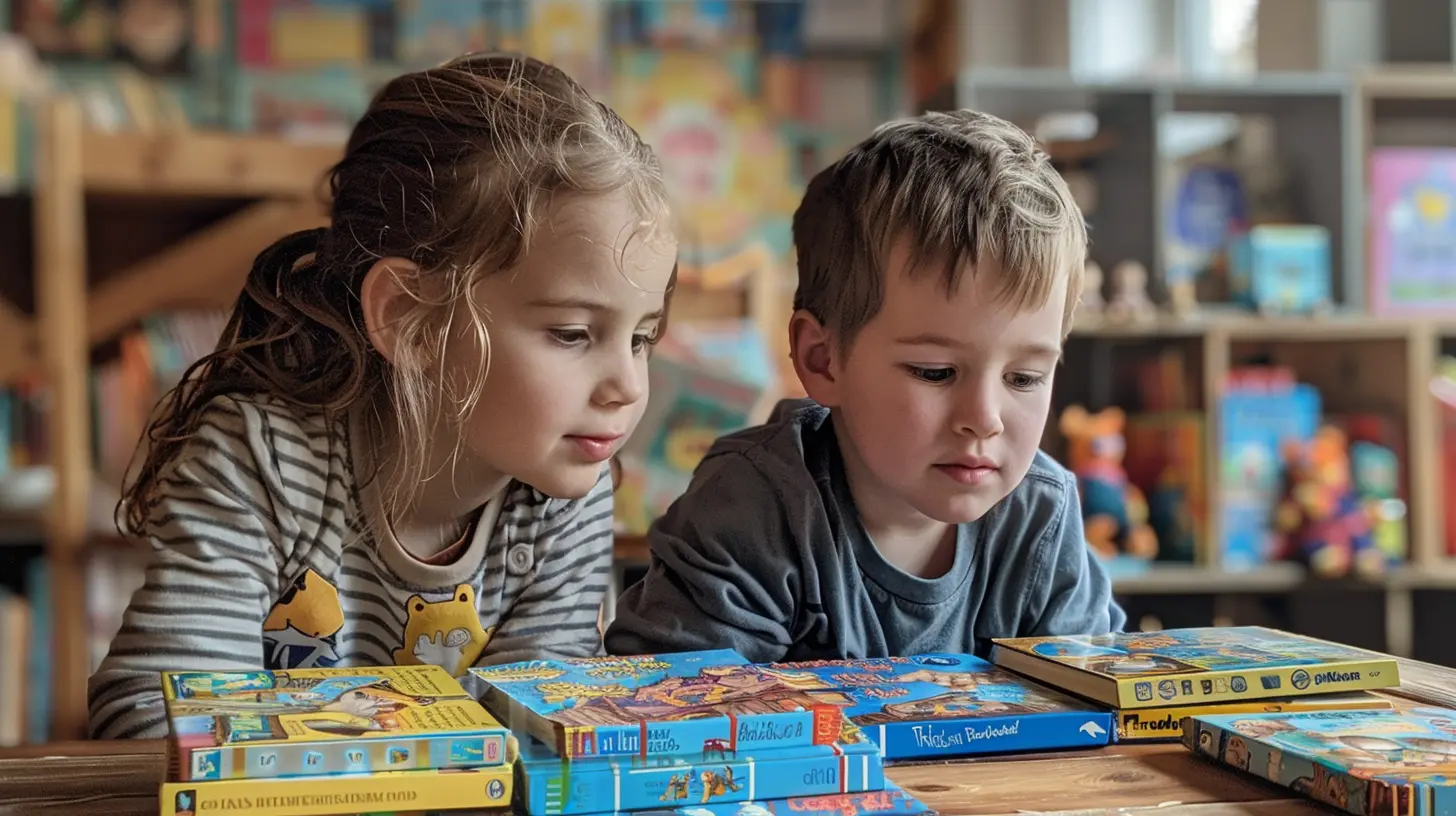
What Makes a Book Great for Problem-Solving?
Not all books are created equal when it comes to building these skills. You’re not looking for just any pretty picture book (although we love those too). You want books that:- Feature main characters who encounter challenges
- Show how the characters think through and solve those challenges
- Encourage critical thinking and creativity
- Invite your child to connect with the story and imagine themselves solving the problem
If a book can capture your child’s interest and subtly nudge them toward better thinking? You’ve hit the jackpot.
Types of Books That Boost Problem-Solving Skills
Yep, there’s more than one type! Let’s break it down:1. Mystery and Puzzle Books
Who doesn’t love a good mystery? These books keep kids asking questions, forming hypotheses, and trying to guess what’s coming next. Think classic detective stories, treasure hunts, spy adventures, or even 'whodunit' tales.Try This:
- Cam Jansen series by David A. Adler
- Encyclopedia Brown by Donald J. Sobol
- I Spy or Where’s Waldo books for younger kids
2. Choose-Your-Own-Adventure Books
These books are magic. They give kids control of the story and force them to think through consequences. If they make a poor choice, they go back and try again—just like real life.Great Picks:
- Choose Your Own Adventure series
- You Choose books by Pippa Goodhart
3. STEM-Themed Stories
Science, tech, engineering, and math books often come with built-in problems and experiments. Kids get to read and learn, then solve problems using logic and creativity.Favorites Include:
- Rosie Revere, Engineer by Andrea Beaty
- Ada Twist, Scientist also by Andrea Beaty
- The Most Magnificent Thing by Ashley Spires
4. Realistic Fiction with Everyday Problems
Sometimes fiction mirrors real life a little too well. And that’s the point! These books can help kids see how characters deal with things like friendship drama, school stress, or even family dilemmas.Books like these foster empathy and show that not all problems are solved with gadgets—sometimes they’re solved with heart and a little patience.
Look For:
- Judy Moody by Megan McDonald
- Ramona Quimby series by Beverly Cleary
- Ivy and Bean by Annie Barrows
5. Wordless Picture Books
Wait—no words? Yep. These books let kids “read” through observation, intuition, and imagination. It boosts critical thinking because they have to fill in the blanks. No spoilers, just pure brain workout.Try:
- Tuesday by David Wiesner
- The Arrival by Shaun Tan
- Flotsam by David Wiesner
Tips for Picking the Right Book for Your Kid
You’ve now got a bunch of title ideas, but how do you decide what’s actually right for your child? Here are some simple guidelines:1. Know Their Interests
If your kid is into space, grab books with space problems. Love animals? Go for animal rescue stories. When the theme hooks them, problem-solving becomes part of the fun—not a chore.2. Consider Their Reading Level
You want books that challenge them just enough—not so hard they give up, and not so easy they get bored. Check out age-appropriate readers, and don’t be afraid to read with them.3. Choose Books with Open-Ended Questions
Books that spark conversation keep the brain buzzing. After reading, ask:- “How would you have solved that?”
- “What could have happened if they chose something different?”
These chats are golden.
4. Look for Diverse Characters and Settings
Books that show different cultures, family setups, or even fantasy worlds help kids think outside their bubble. The more perspectives they see, the more flexible their thinking becomes.Reading Strategies That Encourage Problem Solving
Just handing over the book is great, but taking it one step further? Even better. Here’s how to do it:Pause and Predict
While you're reading, stop and ask, “What do you think will happen next?” This encourages kids to think ahead and consider outcomes.Ask “Why?” and “What If?”
Get curious. “Why do you think they did that?” or “What if they made a different choice?” It gets kids thinking beyond just what's on the page.Let Them Retell the Story
After reading, ask your child to explain the story in their own words. Better yet, have them change the ending. This builds memory, sequencing, and critical thinking.Create Your Own Problems
Inspired by the book? Make up a similar problem and ask your child how they’d solve it. “What would you do if you found a mystery box in your backyard?”Don’t Forget Nonfiction!
Yep, nonfiction books can help too. Biographies of inventors, scientists, and explorers can show kids real-life problem-solving in action.Ever read about Thomas Edison’s endless trial and error or Jane Goodall’s patience studying chimpanzees? These are the ultimate stories of grit and thinking outside the box.
Try These:
- Who Was series
- Little People, Big Dreams books
- National Geographic Kids biographies
Bonus: Book-Based Activities That Build Problem-Solving Skills
Get hands-on to lock in those skills. Try these:Build Something Together
Inspired by Rosie Revere? Grab some recyclables and make your own invention.Create a Comic Strip
Let your child turn the story into a comic, changing the ending or adding their own twist.Act It Out
Kid-friendly role-play helps reinforce how different decisions lead to different outcomes.Author a Story
Have your child write a simple story where the main character faces a problem and has to solve it. This is storytelling with critical thinking baked right in.Age-By-Age Recommendations
Let’s face it—what works for a preschooler probably won’t work for your 10-year-old. So here’s a quick cheat sheet:Toddlers & Preschoolers (Ages 2–5)
- Books with simple conflicts and visual clues- Wordless picture books
- Interactive books like Press Here by Hervé Tullet
Early Elementary (Ages 6–8)
- Early chapter books with relatable problems- Mystery and adventure stories
- Choose-your-own-adventure formats
Tweens (Ages 9–12)
- Deeper problem-based novels- STEM-focused stories with complex challenges
- Biographies of inventors and thinkers
Final Thoughts: Read With a Purpose
At the end of the day, reading with your child is about connection. But when you choose books that offer a little mental workout too? That’s when it becomes magical.Problem-solving doesn’t have to feel like a classroom lesson. With the right story, it feels like an adventure. Like a puzzle waiting to be solved. So the next time you’re browsing the library or bookstore, think about what the story is really offering. Is there a challenge? A clever solution? A “light bulb” moment?
If so—you’re on the right track.
all images in this post were generated using AI tools
Category:
Childrens BooksAuthor:

Tara Henson
Discussion
rate this article
2 comments
Jacob Bellamy
Select diverse narratives to enrich problem-solving perspectives.
March 22, 2026 at 3:49 AM
Tara Henson
Absolutely! Diverse narratives provide varied viewpoints that can enhance critical thinking and creativity in problem-solving.
Dior McIntyre
This article beautifully highlights the importance of fostering problem-solving skills in children through books. Thank you for sharing such insightful recommendations!
March 7, 2026 at 3:46 PM
Tara Henson
Thank you for your kind words! I'm glad you found the recommendations helpful in fostering problem-solving skills in children.